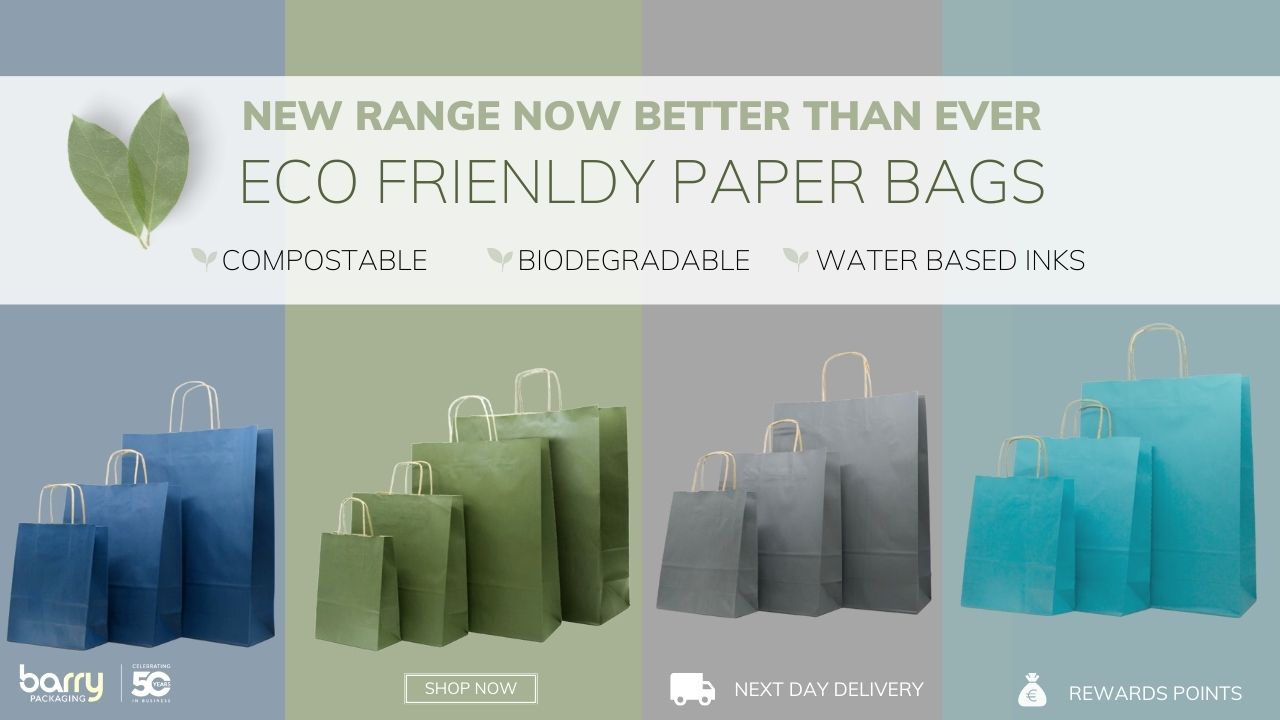
2023 Guide to Eco Friendly Paper Bags
Eco-friendly paper bags have become an increasingly popular choice for consumers and businesses alike due to their environmentally conscious nature. These bags are made from sustainable materials and are designed to be recyclable, compostable or biodegradable. Many presume that if a paper bag is made from paper, it is 100% environmentally friendly. Unfortunately, many paper bags are not! We will discuss key components that make paper bags environmentally friendly.
Paper Type
The choice of paper type is critical when it comes to eco-friendly paper bags. Ideally, the paper used should be sourced from sustainable forests that are managed responsibly. Forest Stewardship Council (FSC) or Programme for the Endorsement of Forest Certification (PEFC) certified paper is a good option. Also, recycled paper, which reduces the demand for virgin pulp, is an excellent choice.
In addition to the source of the paper, the thickness and weight of the paper are also important considerations. A thicker and heavier paper will be more durable and able to withstand heavier loads. However, thicker paper also means more material is used and can increase the overall cost of the bag. Therefore, finding a balance between durability and cost is important.
Print Finish

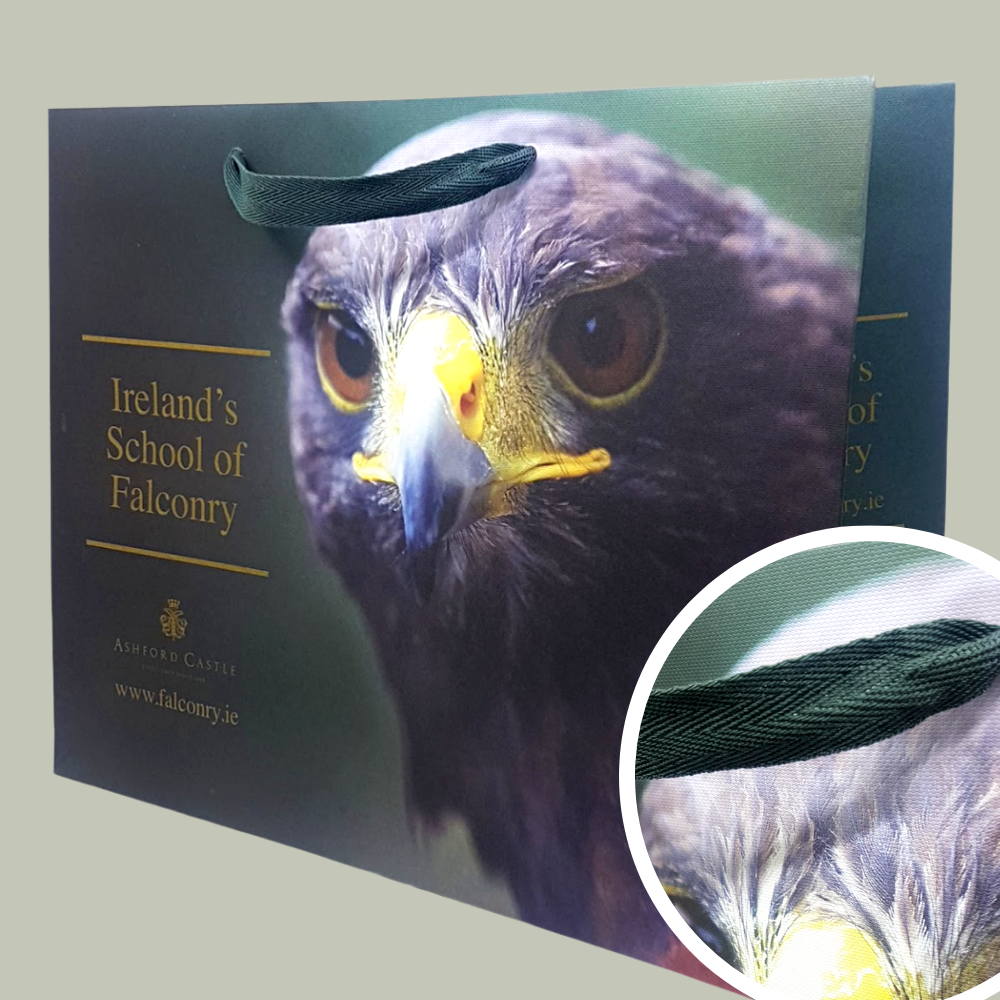
To add a touch of luxury, many brands choose high-end print finishes, such as glossy lamination, gold foil or embossing. Unfortunately many of these finishes are not eco friendly.
Foil stamping is a popular finish that adds metallic or holographic elements to packaging. While foil stamping can create a visually striking effect, it is not an eco-friendly option, as it often involves the use of petroleum-based materials and is difficult to recycle.
Lamination is another finish that involves applying a thin layer of plastic to the surface of the paper. This creates a smooth and glossy finish that can help protect the packaging from moisture and wear and tear. However, lamination makes the packaging less eco-friendly, as the plastic layer is not recyclable, compostable or biodegradable.
Varnish is a finish that adds a shiny or matte coating to the surface of the paper. It can be used to enhance the visual appeal of the packaging and provide additional protection against moisture and wear and tear. While varnish is generally considered more eco-friendly than lamination or foil stamping, it is still a coating that can make the packaging harder to recycle.
Embossing and debossing are print finishes that create a three-dimensional effect on the surface of the packaging. This can create a tactile experience for the consumer and add visual interest to the packaging. Embossing and debossing are generally considered more eco-friendly than other print finishes, as they do not involve the use of additional coatings or materials.
AVOID: laminated paper, UV spot varnish, metallic foil
CHOOSE: embossing, debossing
Handles
Handles are an essential part of paper bags, and they must also be eco-friendly. Handles made from materials such as cotton, jute, hemp or paper are excellent options as they are biodegradable and can be reused.
AVOID: satin, nylon, polyester
CHOOSE: paper, cotton, jute, hemp
INKS
Inks used for printing on the paper bags must be eco-friendly. Soy-based or vegetable-based inks are a popular option as they are biodegradable and don't contain toxic chemicals. These inks are also easy to remove during the recycling process, making them a better option than petroleum-based inks.
AVOID: Petroleum-based Ink
CHOOSE: soy and water based inks
Compostable, Biodegradable, and Recyclable. Which one to choose?
Compostable paper bags are made of materials that can break down in a compost environment. Composting is a controlled process that uses heat, moisture, and microorganisms to break down organic matter, such as food scraps and yard waste, into nutrient-rich soil. Compostable packaging materials are designed to break down along with the organic waste in a composting facility, without leaving behind any harmful residues.
Biodegradable packaging refers to materials that can break down into natural elements through natural processes, such as exposure to sunlight, water, and microorganisms. However, the term "biodegradable" is not regulated and can be misleading. Many biodegradable materials can take a very long time to degrade, and some may release harmful substances (microplastics) into the environment during the process. Additionally, biodegradable packaging often ends up in landfills, where the conditions are not optimal for decomposition.
Recyclable packaging refers to materials that can be collected, sorted, and processed to create new products. Recycling helps to conserve natural resources, reduce waste, and decrease greenhouse gas emissions. However, not all packaging materials are equally recyclable. Some materials, such as glass and aluminum, are highly recyclable and can be recycled infinitely without losing their quality. Others, such as plastic, are less recyclable and may lose quality with each recycling cycle. Additionally, some packaging materials may be recyclable in some areas but not others, depending on local recycling facilities and regulations.
In conclusion, when it comes to eco-friendly paper bags, choosing just a paper bag does not make it eco friendly! The goal is for the entire product to be environmentally friendly - inks, handles and any print finishes.
Did you know that 90% of our stock paper bags are environmentally friendly?